
Table of Contents
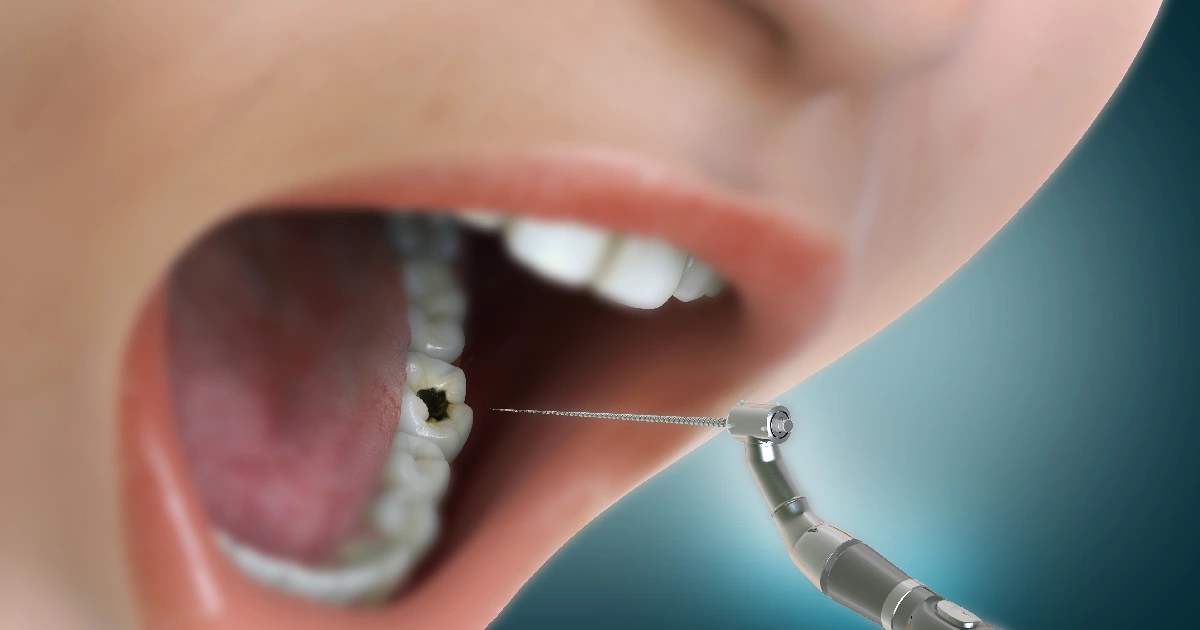
Finding out you have a cavity usually brings one expectation: the tooth will need to be drilled and filled. That is still appropriate for many cavities, but decay does not begin as a visible hole. In its earliest stage, minerals can leave the enamel while the outer surface remains intact. When dentists identify decay at this point, there may be an opportunity to manage the lesion before a traditional restoration is necessary. In some cases, yes, an early cavity can be addressed without drilling, but only when decay is caught before cavitation.
That distinction is changing how dentists approach early cavity treatment. The goal is to determine how far the lesion has progressed and choose an approach that preserves healthy tooth structure when clinically appropriate.
Can tooth decay be treated before a filling is needed?
In some cases, early tooth decay can be managed before a hole forms in the tooth. When the enamel is still intact, treatments such as Curodont may support remineralization within the affected area and help prevent the lesion from progressing. A dental exam can determine whether the decay is early enough for this approach or if a filling is more appropriate.
What Does It Mean to Reverse an Early Cavity?
The phrase reverse early cavities can be confusing because it does not apply to every stage of tooth decay. A true hole or cavitation cannot simply grow back. Once enough tooth structure has been lost, restorative treatment such as a filling may be needed.
Early, noncavitated decay is different. At this stage, enamel has lost minerals but has not collapsed into a cavity. Dental guidance recognizes that some noncavitated lesions can be arrested or reversed with nonrestorative approaches, depending on the tooth surface and individual risk factors. This is where remineralization for cavities becomes relevant. The aim is to return minerals to weakened enamel and keep the lesion from progressing.
How Curodont Treatment Fits Into Early Decay Care
Curodont treatment is designed for early-stage caries that still has an intact tooth surface. Curodont Repair Fluoride Plus is applied in the dental office and is designed to work below the enamel surface, supporting restoration of mineral density throughout the early lesion. Its formulation helps create conditions for minerals from saliva to contribute to repair within affected enamel.
This makes Curodont cavity treatment different from a filling. A filling removes compromised tooth structure before replacing it with restorative material. Curodont is intended as a non-invasive cavity treatment for selected early lesions, so the natural enamel remains in place. It is not intended to replace fillings, crowns, or other restorative procedures when decay has advanced.
4 Things Dentists Consider Before Choosing a Drill-Free Approach
A small area of decay on an X-ray does not automatically mean Curodont is the right choice. Dentists evaluate several details before recommending early tooth decay treatment.
- Is the enamel surface still intact? Curodont is intended for early, noncavitated lesions. A visible hole or structural breakdown changes the treatment decision.
- How deep is the decay? Clinical examination and dental X-rays can help show how far the lesion extends and whether it remains within a stage that may respond to nonrestorative care.
- Is the lesion active? Dentists consider appearance, location, texture, and changes over time. An active lesion may require a different management plan than an area that has remained stable.
- What is the patient’s overall cavity risk? Dry mouth, frequent sugar exposure, oral hygiene habits, fluoride exposure, and a history of recent cavities can influence treatment selection and follow-up.
These factors explain why drill-free care starts with diagnosis rather than simply choosing a product.
Curodont Does Not Remove the Need for Ongoing Prevention
Even when an early lesion is treated, the conditions that contributed to decay still need attention. Plaque bacteria produce acids when exposed to fermentable carbohydrates, and repeated acid attacks can lead to new mineral loss.
Daily brushing with fluoride toothpaste, cleaning between the teeth, limiting frequent sugary snacks or drinks, and attending recommended dental visits remain important. A dentist may also recommend professional fluoride, sealants, or other preventive measures based on cavity risk. Curodont addresses a specific early lesion. It does not make a tooth immune to future decay.
When a Filling May Still Be the Better Option
The appeal of avoiding drilling should not overshadow the stage of the disease. If decay has created a cavity, weakened the tooth, or progressed into deeper structures, placing a restoration may be the more appropriate way to protect function.
This is why the word “early” is important in early cavity treatment. Curodont occupies a narrower window than conventional restorative dentistry. Finding decay before the enamel surface breaks down gives the dental team more options, but those options depend on an accurate examination.
Cavity Treatment in Phoenix, AZ at 24th Street Dental Care
For patients seeking cavity treatment in Phoenix AZ, 24th Street Dental Care places a strong emphasis on preventive dentistry and early detection. Its preventive-care services include comprehensive exams, digital X-rays when needed, professional cleanings, and fluoride treatment when appropriate. Our team also provides resin composite fillings for cavities that require restorative care.
An exam can help establish whether an area of decay is still early enough for a nonrestorative approach or has reached the point where a filling is indicated. If you are concerned about a new cavity or an area being monitored, schedule an evaluation with us to discuss the next step.
Book Your Early Cavity Treatment Today.
Frequently Asked Questions
Can Every Early Cavity Be Reversed Without Drilling?
No, only certain noncavitated lesions may be candidates for remineralization or other nonrestorative treatment, depending on their depth, activity, and location.
Does Curodont Replace Dental Fillings?
No, Curodont is intended for selected early-stage lesions and does not replace fillings when tooth structure has already broken down.
Is Curodont Used on Children as Well as Adults?
Curodont Repair Fluoride Plus is described by its manufacturer as suitable for children and adults when the lesion meets treatment criteria.